Medical Assistant Jobs in the USA: What They Pay and How to Apply
“Medical assistant jobs” draws about 201,000 searches a month in the US — and 125 roles carrying the title are live on GigBlow, most of them in Washington and Oregon. This guide covers what the work involves, whether you need a certificate, what it pays, and how to apply.
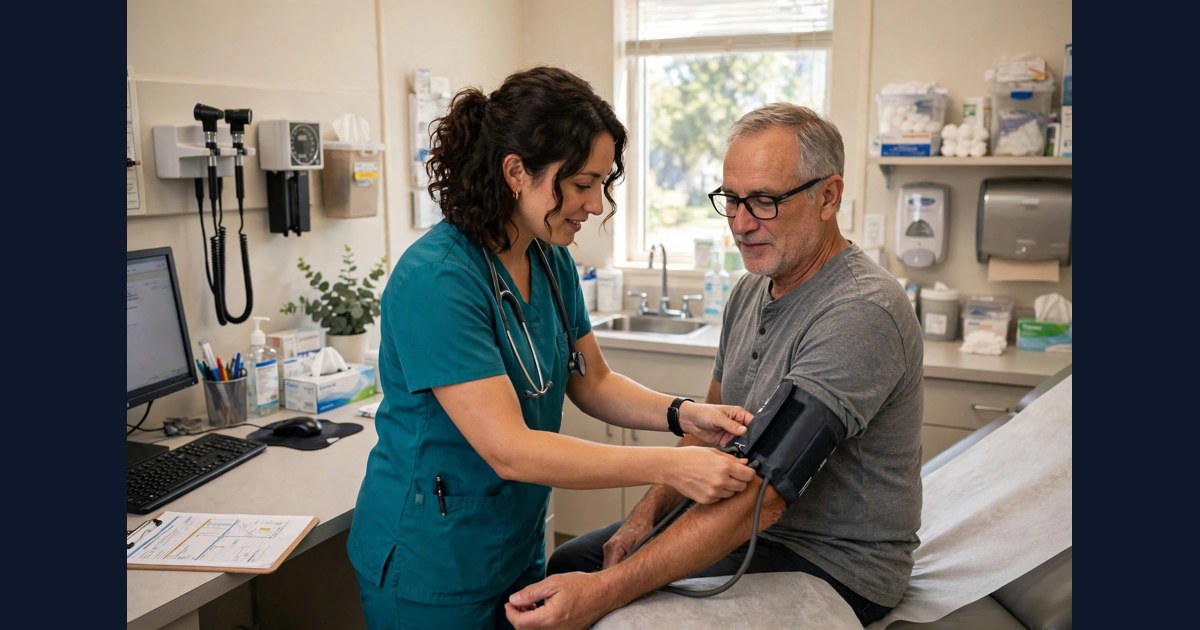
At a glance
- Medical assistant jobs draw about 201,000 searches a month in the US — and 125 roles carrying the title are live on GigBlow right now, most of them in Washington and Oregon.
- The national median is $44,200 a year (BLS, May 2024), and the live listings state their own hourly ranges — $21.44 to $36.31 an hour, depending on the clinic and the shift.
- A certificate helps but is not always required: many clinics train on the job, and the guide separates the certified route from the uncertified one.
- The work is clinical and administrative at once — vitals and room prep in the morning, records and scheduling in the afternoon — and the guide shows both halves honestly.
- Certified nursing assistant and medical coding roles are covered as the two closest alternatives, with their own live counts.
"Medical assistant jobs" draws about 201,000 searches a month in the United States — one of the most searched healthcare job phrases in the country — because the role is the fastest way into clinical work without a degree. GigBlow currently lists 214,843 live jobs across the United States, the United Kingdom and Canada — 43,940 in the USA, 120,652 in the UK and 50,251 in Canada — and healthcare is the largest classification on the American board, with 31,047 live roles. Inside that, 125 roles carry "medical assistant" in the job title, and a further 37 carry "certified nursing assistant" or "CNA".
This guide is about the American end of that board: what a medical assistant actually does, where the live roles are, what they pay according to the Bureau of Labor Statistics and according to the listings themselves, whether you need a certificate, and how to apply. Every role named here is live on GigBlow today, from Company B (WhatJobs) and CompanyG A (JobG8) — the only two sources this guide uses.
The honest numbers behind medical assistant jobs in the USA
Start with the shape of the board, because it is uneven in a useful way. Healthcare and medical roles dominate the USA listings at 31,047 — more than any other classification — but medical assistant titles are only 125 of them. The rest are physicians, nurses, therapists and specialists. A medical assistant search returns a small, specific list, not a flood, and that is actually helpful: the roles you find are the roles that exist, not a pile of near-matches.
The geography is concentrated. Sixty-five of the 125 medical-assistant-titled roles are in Washington state, and 33 are in Oregon — together, more than three quarters of the live list. The reason is a single large employer: Yakima Valley Farm Workers Clinic, a community health organisation with clinics across Washington and Oregon, is hiring certified medical assistants across many of its sites right now. The remaining roles are spread across South Carolina, Ohio, Massachusetts, Wisconsin, Colorado and a handful of other states.
The towns tell the same story. Toppenish, Wapato, Selah, Yakima, Sunnyside and Grandview — all in Washington's Yakima Valley — hold the most live roles, followed by Pendleton and Hermiston in Oregon. These are small agricultural towns, not big cities, and the clinics there serve farm-worker communities. If you live in or near the Yakima Valley, the work is waiting. If you live elsewhere, the guide's search method below matters more than the list itself, because the board's medical assistant roles move as clinics publish them.
What a medical assistant actually does
A medical assistant does two jobs at once, and the split is the first thing to understand before you apply.
The clinical half. You take vital signs, record medical histories, prepare patients for examination, draw blood, give injections where the state allows it, and prepare the examination room. You work under a physician or a nurse, and you are the person the patient sees first. The clinical half is why the role needs training: a mistake with a vital sign or a sample matters.
The administrative half. You schedule appointments, update electronic health records, handle insurance forms, answer phones, and manage the flow of the clinic day. In a small clinic the administrative half can be most of the job; in a large one it is shared with front-desk staff. Either way, a medical assistant who cannot use the records system is not useful, and listings ask for computer skills as often as they ask for clinical ones.
The two halves explain why employers value different things in different roles. A "Certified Medical Assistant - Relief" role at a clinic asks for flexibility across sites and shifts. A full-time role at a single clinic asks for continuity with the same patients. Read the listing for which half it leans towards, and apply for the one that fits how you work.
Do you need a certificate to become a medical assistant?
Short answer: it helps a lot, and in some states and employers it is required — but it is not the only way in.
The certified route. The two main credentials are the Certified Medical Assistant (CMA), awarded by the American Association of Medical Assistants, and the Registered Medical Assistant (RMA), awarded by American Medical Technologists. Both need a training programme — usually nine months to two years at a community college or vocational school — and a passed exam. Employers in the live listings ask for certification explicitly: Yakima Valley Farm Workers Clinic's roles are titled "Certified Medical Assistant", and the certificate is part of the job title, not an optional extra.
The uncertified route. Some clinics hire without a certificate and train on the job, especially for administrative-heavy roles, and some states do not legally require certification for the tasks a medical assistant performs. The pay is usually lower, and the roles are fewer, but the route exists — and a year of clinic experience plus a certificate afterwards is a common path into the certified roles.
What to check before you spend money on a programme. Make sure the programme is accredited and that its graduates are eligible for the CMA or RMA exam — a programme that does not lead to an exam is a dead end. Check the cost against the pay in this guide: a programme that costs more than a year's salary increase is a bad deal. And never pay an employer for training or for a "placement" — legitimate clinics train you after they hire you, not before.
What medical assistant jobs pay
Pay is where this guide can be precise, because the live listings state their own rates — and because the Bureau of Labor Statistics publishes a national figure to compare them against.
The BLS Occupational Outlook Handbook puts the median annual wage for medical assistants at $44,200 in May 2024, or $21.25 an hour. The lowest 10 percent earned less than $35,020, and the highest 10 percent earned more than $57,830. The BLS projects employment of medical assistants to grow 12 percent from 2024 to 2034, much faster than the average for all occupations — about 112,300 openings a year. Pay varies by state: Washington, where most of the live roles are, has a median of $55,120, and California $48,050, both above the national figure.
The live listings pay above the national median, which is worth noting honestly: the Yakima Valley roles are the evidence. A Certified Medical Assistant role in Pendleton, Oregon states $22.73 to $33.47 an hour in its title, with a $1,500 bonus. A relief role in Prosser, Washington states $21.44 to $31.58 an hour. A relief role in Vancouver, Washington and in Oregon City, Oregon states $24.66 to $36.31 an hour. Those are the rates the employer publishes in the listing itself, and they sit above the BLS median hourly rate of $21.25 — partly because Washington and Oregon pay more than the national average, and partly because certified roles pay more than uncertified ones.
| Measure | Figure | Source and date |
|---|---|---|
| Median annual wage, medical assistants, USA | $44,200 ($21.25 an hour) | BLS OOH, May 2024 |
| Lowest 10 percent | Less than $35,020 | BLS OOH, May 2024 |
| Highest 10 percent | More than $57,830 | BLS OOH, May 2024 |
| Median annual wage, Washington state | $55,120 | BLS OEWS, May 2024 |
| Median annual wage, California | $48,050 | BLS OEWS, May 2024 |
| Projected growth, 2024–34 | 12%, much faster than average | BLS OOH |
Three things move pay above or below the median. Place matters most: the same role pays more in Washington and California than in lower-cost states, and the live listings prove it. Certification matters next: certified roles state higher ranges than uncertified ones. Setting matters too: hospital outpatient and specialty clinics pay more than small private practices. Check the rate stated in the listing, and divide any annual figure by the hours you will actually work to get the real hourly rate.
A real pay example: live medical assistant roles on GigBlow
The best way to understand the work is to look at the real roles that are live right now. The five below are all live on GigBlow at the time of writing, all from Company B (WhatJobs) and CompanyG A (JobG8). Their pay figures are quoted exactly as the listings state them — the hourly ranges appear in the job titles themselves.
Yakima Valley Farm Workers Clinic — Certified Medical Assistant, Pendleton, Oregon. The listing states $22.73 to $33.47 an hour plus a $1,500 bonus. Pendleton is a small city in eastern Oregon, and the clinic serves the surrounding farm-worker community. The range is wide because it covers experience levels: a newly certified assistant starts near the bottom, and an experienced one earns near the top.
Yakima Valley Farm Workers Clinic — Certified Medical Assistant, Prosser, Washington (relief). The listing states $21.44 to $31.58 an hour. Relief means covering shifts across the clinic's sites rather than holding one fixed post — more variety, less routine, and the same hourly range as the full-time roles.
Yakima Valley Farm Workers Clinic — Certified Medical Assistant, Vancouver, Washington (relief). The listing states $24.66 to $36.31 an hour — the highest range in the live list, and in line with Washington's $55,120 state median. Vancouver sits across the river from Portland, and the clinic there pays the Washington rate.
Yakima Valley Farm Workers Clinic — Certified Medical Assistant, Toppenish, Washington (full time). The listing states a $1,500 bonus for a full-time role. Toppenish holds the most live medical assistant roles on the board — 10 — and the clinic is the town's main healthcare employer.
OnPoint Medical Group — Medical Assistant, Arvada, Colorado. A medical assistant role outside the Washington–Oregon cluster, in a suburb of Denver. The listing states no pay figure, so none appears here — the BLS median of $44,200 a year is the right comparison for it.
The lesson from these five is the concentration. Four of the five come from one employer in two states, and the pay ranges they state are the market for certified assistants in the Pacific Northwest. If you are certified and willing to work in Washington or Oregon, the roles are there today. If you are elsewhere, the same employer pattern holds in miniature: search for the community health clinics in your own state, and for the "certified medical assistant" title specifically.
The closest alternatives: CNA and medical coding roles
Two nearby roles draw their own searches, and both have live listings on GigBlow.
Certified nursing assistant (CNA). "Jobs CNA" draws about 74,000 searches a month. CNAs work in nursing homes, hospitals and home care, helping patients with daily living — bathing, dressing, eating, moving — under a nurse's supervision. The training is shorter than a medical assistant programme, often a few weeks, and the work is more physical. There are 37 CNA-titled roles live on GigBlow in the USA right now, and together with the 125 medical assistant roles they make 162 live roles across the two titles.
Medical coding. "Medical coding jobs" draws about 40,500 searches a month. Coders translate medical records into the codes used for billing and insurance, and the work is mostly desk-based and increasingly remote. It needs a coding certificate rather than clinical training, and it suits people who prefer paperwork to patients. The live board carries coding roles inside the healthcare classification, though fewer than the assistant roles.
| Role | Live USA roles on GigBlow | Training | BLS median (May 2024) |
|---|---|---|---|
| Medical assistant | 125 | 9 months–2 years, CMA or RMA | $44,200 a year |
| Certified nursing assistant | 37 | A few weeks | $39,430 a year (nursing assistants, BLS) |
| Medical coder | Inside the 31,047 healthcare roles | Coding certificate | $50,250 a year (medical records specialists, BLS) |
The CNA and medical coder figures in the table are BLS medians for the nearest published occupation — nursing assistants, and medical records and health information specialists — because the BLS does not publish a separate CNA or coder line. They are the right comparisons, and they are named as such.
How to apply on GigBlow
Finding the roles above takes a few minutes on GigBlow. The steps below use the board's own search.
- Open the healthcare jobs in the United States page. It lists every live healthcare role in the USA, newest first. Healthcare is the largest American classification on the board, with 31,047 roles.
- Search by title, not by category alone. Type "medical assistant" in the search, then narrow it: add "certified" for the certified roles, or a state — "Washington" or "Oregon" — for the cluster where most of the live roles sit.
- Check the certificate in the listing. If the title says "Certified Medical Assistant", the certificate is required — do not apply without it. If it says only "Medical Assistant", read the requirements: some clinics train on the job.
- Compare the stated rate with the BLS median. The listings in this guide state $21.44 to $36.31 an hour; the BLS median is $21.25 an hour. A rate below the median is not automatically bad — it may be an uncertified or part-time role — but know where you stand before you accept.
- Apply through the link on the job page. Each listing carries its own apply route to the employer. Clinics move fast on medical assistant hiring, and a reply often comes within a week.
- Watch the board, and widen the search if your state is quiet. The jobs in the United States page shows everything live in the country, and the healthcare jobs page shows the same roles across all three countries. If no medical assistant role is live near you, the jobs in New York City page and the jobs in Atlanta page show the two biggest American healthcare markets on the board.
For the wider picture of American healthcare hiring, the GigBlow guide on healthcare jobs in the USA covers the roles, the pay and the application process across the whole classification, and the guide on how to get a job with no experience in the USA covers the entry routes if you are starting from scratch.
Frequently asked questions
What does a medical assistant earn in the USA? The national median is $44,200 a year, or $21.25 an hour (BLS, May 2024). The live listings on GigBlow state $21.44 to $36.31 an hour, depending on the clinic and the state — Washington and Oregon pay above the national median. Certified roles pay more than uncertified ones.
Do I need a certificate to become a medical assistant? It helps a lot, and the live roles in this guide ask for it: the Yakima Valley Farm Workers Clinic roles are titled "Certified Medical Assistant". The CMA (from the AAMA) and the RMA (from AMT) are the two main credentials. Some clinics hire without one and train on the job, but the certified roles are the majority of the live list.
Where are the medical assistant jobs? On GigBlow right now, 65 of the 125 live roles are in Washington state and 33 in Oregon — mostly with one community health employer, Yakima Valley Farm Workers Clinic, in towns like Toppenish, Yakima and Pendleton. The rest are spread across the country, so search your own state as well.
What is the difference between a medical assistant and a CNA? A medical assistant does clinical and administrative work in a clinic — vitals, room prep, records and scheduling — and usually holds a CMA or RMA certificate. A CNA works in nursing homes and hospitals, helping patients with daily living, and trains in a few weeks. There are 125 medical assistant roles and 37 CNA roles live on GigBlow in the USA right now.
How do I apply for a medical assistant job on GigBlow? Open the healthcare jobs in the United States page, search "medical assistant", check the certificate requirement on the listing, compare the stated rate with the BLS median of $44,200 a year, and follow the apply link on the job page.
GigBlow Jobs
Looking for medical assistant work?
Browse live healthcare roles in the USA on GigBlow — medical assistant, CNA and coding roles — and use this guide to check the certificate and the rate before you apply.
Browse healthcare jobs in the USA →